 By

You can have a hair transplant in Dubai’s summer, but the heat shapes how you spend the first weeks. Direct sun, heavy sweating and swimming are the main things to manage while the scalp heals. With shade, air-conditioning and careful aftercare, a summer trip can work.
This guide explains why heat matters for a healing scalp and how to stay cool day to day. It also looks at why many people choose the cooler months instead.
Why do sun and sweat matter after a hair transplant?
In the first days, the grafts are settling and the scalp is tender. It needs to stay clean, calm and protected while that happens.
- Direct sun. A freshly treated scalp has little hair to shield it. Sunburn there is painful and can slow healing.
- Sweat. Heavy sweating can irritate the treated area and make it harder to keep clean. It can also make the scalp itch, which tempts you to scratch.
- Dust. Windy days can carry fine dust and sand. On those days, indoor plans are the easier choice for a healing scalp.
- Heat. Feeling hot and flushed makes the first days less comfortable, and it can make it harder to sleep well.
None of this rules out summer. It means planning your days around shade and cool air, and following your surgeon’s aftercare closely.
How hot does Dubai get in summer?
Very hot. In the peak months, roughly June to September, daytime temperatures often pass 40°C, and the coast can feel humid. Humid air also slows the drying of sweat, so you can feel damp even in the shade.
Much of daily life moves indoors in this season. Hotels, malls, taxis and the metro are air-conditioned, which helps a great deal while you recover.
The challenge is the gaps in between. Think of the walk from a taxi to a door, a queue outside, or a stroll that runs longer than planned.
Alborj Hair Clinic, for example, is in Al Wasl, so staying nearby keeps those gaps short.
How do you stay cool and protected after surgery?
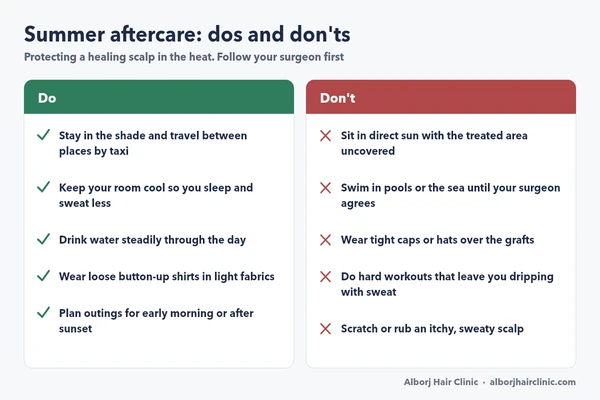
- Stay in the shade. Many clinics advise keeping direct sun off the scalp for the first few weeks. Follow your own surgeon’s timing.
- Keep your room cool. A cool room helps you sleep and sweat less, especially on the night after the procedure.
- Drink plenty of water. It is easy to get dehydrated in Dubai’s heat, particularly after a long day at the clinic.
- Wear loose, light clothing. Button-up shirts in cotton or linen keep you cool and mean nothing goes over your head.
- Ask before covering your head. Many clinics allow a loose hat after a few days, while others prefer you to wait. Your surgeon will tell you when.
“The scalp heals well, but in the first days it needs protecting from strong sun and heavy sweating. In Dubai that mostly means planning your days around shade and air-conditioning, and following the aftercare advice closely.”
What does a cool, careful day look like?
In the days after the procedure, it helps to plan each day around the sun rather than the sights. A simple rhythm looks like this:
- Morning. Fit in any clinic visit or errand early, before the heat builds.
- Midday. Stay indoors in air-conditioning. This is the time to rest, read or watch a film.
- Afternoon. If you want to go out, choose an indoor place and travel door to door by taxi.
- Evening. Once the sun has set, a short, slow walk can feel pleasant. Summer evenings can stay hot and humid, so keep it brief.
- Night. Keep the room cool, and follow your clinic’s advice on sleeping position.
When can you swim or go to the beach?
Not straight away. Pools, the sea and hot tubs can expose a healing scalp to chlorine, salt and bacteria, as well as strong sun.
Many clinics advise avoiding swimming for around two to four weeks, but timings vary. Your own surgeon’s instructions always come first.
Saunas, steam rooms and hard workouts are often paused too, as they bring on heavy sweating. Many clinics suggest around one to two weeks without strenuous exercise, so check your own surgeon’s timing.
A beach holiday can still be part of the trip. It simply works better before the procedure, or on a later visit.
Are the cooler months a better time to go?
Many people think so. From roughly November to March, days in Dubai are usually warm rather than scorching, and evenings are pleasant outdoors.
October and April can be a middle ground, though the middle of the day can still feel hot.
That makes rest days easier and lowers the risk of an accidental hour in strong sun. It is also a busy time for visitors, so book flights and rooms early.
Summer still suits some people, such as those whose leave falls then. With careful planning and close attention to aftercare, it can work.
The result builds slowly whichever month you choose. New growth usually appears from around three months, and the full result at about a year. So a summer procedure usually shows its full result by the following summer.
About Alborj Hair Clinic
Alborj Hair Clinic is a hair transplant clinic in Mazaya Centre, Al Wasl, Dubai. Its surgeon, Dr Dimitrios Ziakas, has 24 years of experience and has performed more than 4,000 hair transplant procedures. He is a member of the International Society of Hair Restoration Surgery (ISHRS) and uses the DHI (Direct Hair Implantation) technique.
The clinic publishes before-and-after case studies on its website, giving a sense of how results develop over the year.
Frequently asked questions
Can I wear a cap to block the sun?
Not straight away. Many clinics allow a loose hat after a few days, but tight caps can press on the grafts, so ask your surgeon first.
Can I put sunscreen on my scalp?
Ask your surgeon before putting anything on the treated area. In the early days, shade is the simplest protection.
Will a little sweat harm the grafts?
Some sweat is hard to avoid in Dubai. The aim is to avoid heavy sweating, keep the area clean as advised, and not rub or scratch it.
Does the heat change when I can fly home?
Not usually. Many clinics suggest a day or two after the procedure, but your own surgeon will confirm the timing.


Comments